
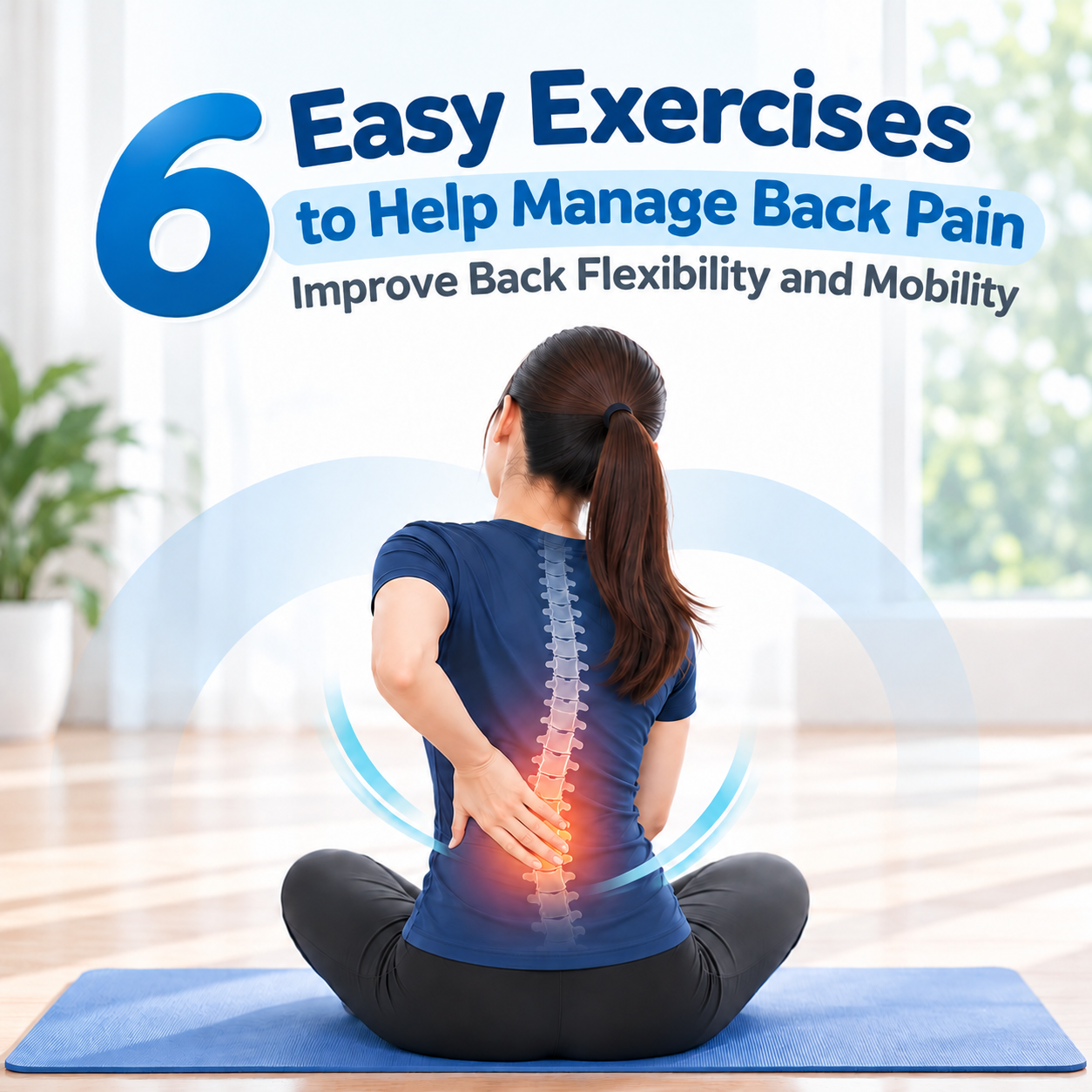
A collection of six exercises to help manage lower back pain, including Knee Rolls, Knee-to-Chest, Straight Leg Raise, and Glute Bridge, with step-by-step instructions and precautions.
Lower back pain is a common problem that can result from various factors, such as overusing muscles and the body, staying in the same position for long periods, or structural problems involving the bones and joints.
For general back pain, staying active and maintaining appropriate movement are important parts of managing symptoms. It is not always necessary to stay in bed or stop moving completely. Choosing suitable exercises and gradually increasing the intensity according to your ability may help improve mobility and physical function.
This article introduces six basic exercises for people with general lower back pain. They can serve as a starting point for managing symptoms and improving body movement.
Note: Not every exercise is suitable for every type of back pain. If your pain significantly worsens during an exercise, or you experience radiating pain, numbness, or muscle weakness, stop exercising and consult a doctor or healthcare professional.
1. Knee Rolls
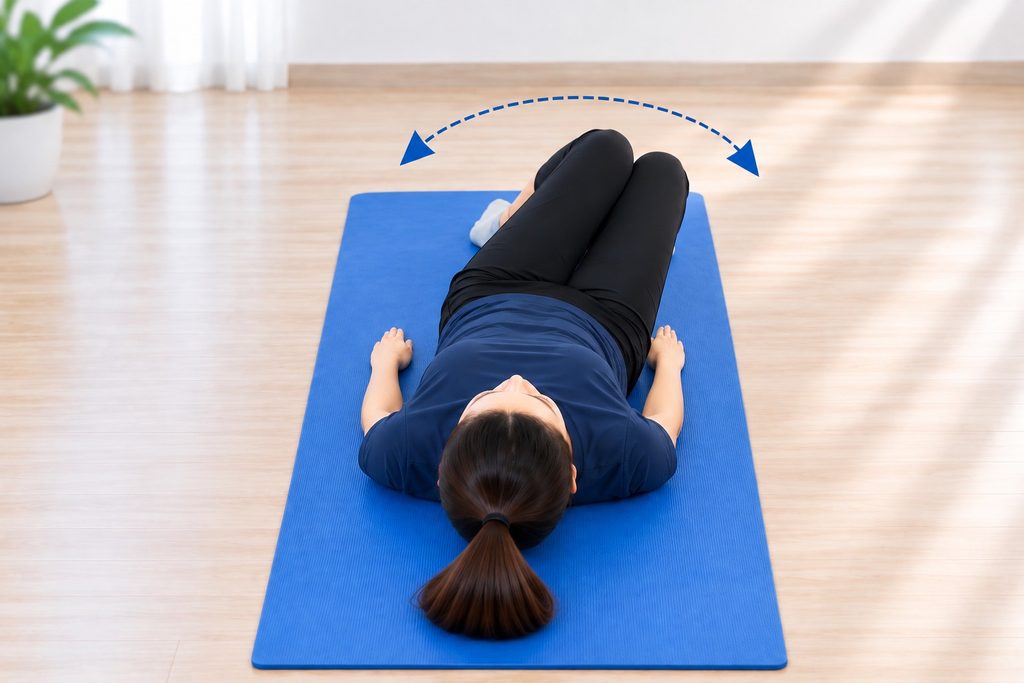
Helps gently improve mobility in the lower back.
How to do it
- Lie on your back with both knees bent and your feet flat on the floor.
- Place both arms by your sides to support your body.
- Slowly lower both knees to the left until you feel a gentle stretch.
- Hold for about 5 seconds.
- Return to the starting position and repeat on the right side.
Recommended: Perform approximately 10 repetitions, or adjust the number according to your ability.
2. Single Knee-to-Chest
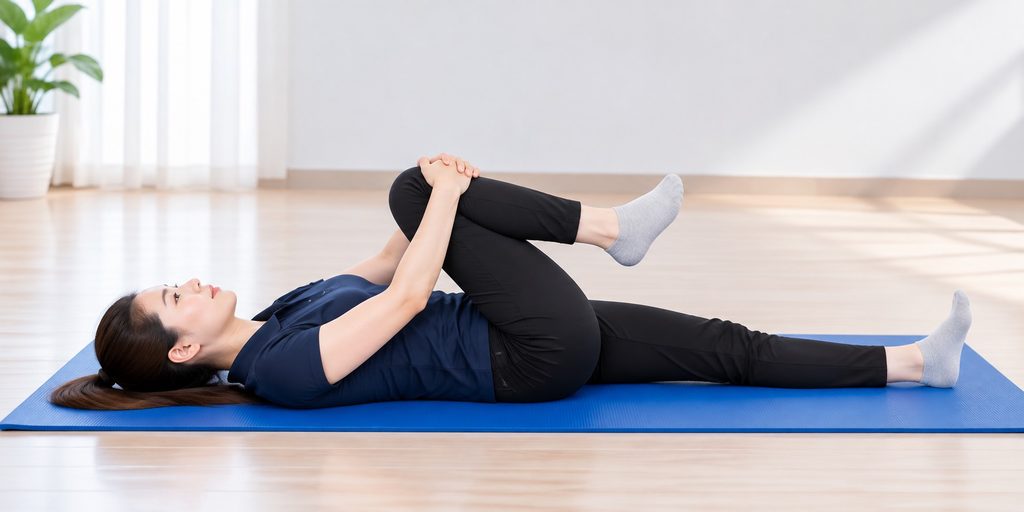
Helps stretch the lower back and hip area.
How to do it
- Lie on your back with both legs extended.
- Bring one knee toward your chest.
- Use your hands to support the back of your thigh.
- Gently pull your knee toward your body until you feel a comfortable stretch.
- Hold for about 5–10 seconds.
- Slowly lower your leg and repeat on the other side.
Recommended: Perform approximately 10 repetitions per side, or as appropriate for your ability.
3. Straight Leg Raise
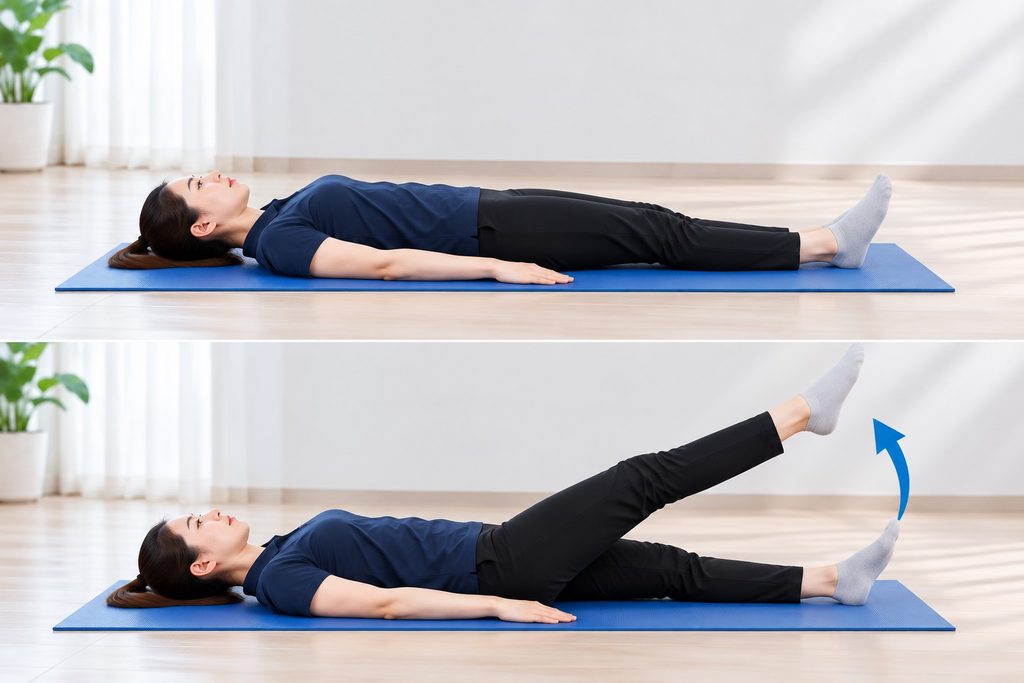
Helps strengthen the leg and hip muscles while improving control of trunk movement.
How to do it
- Lie on your back with both legs extended.
- Raise one leg to approximately 45 degrees while keeping your knee straight.
- Flex your ankle toward your body as comfortable.
- Hold for about 5–10 seconds.
- Slowly lower your leg to the starting position.
- Repeat on the other side.
Recommended: Perform approximately 10 repetitions per side.
If raising your leg causes pain that radiates down your leg, numbness, or worsening symptoms, stop and consult a healthcare professional.
4. Glute Bridge
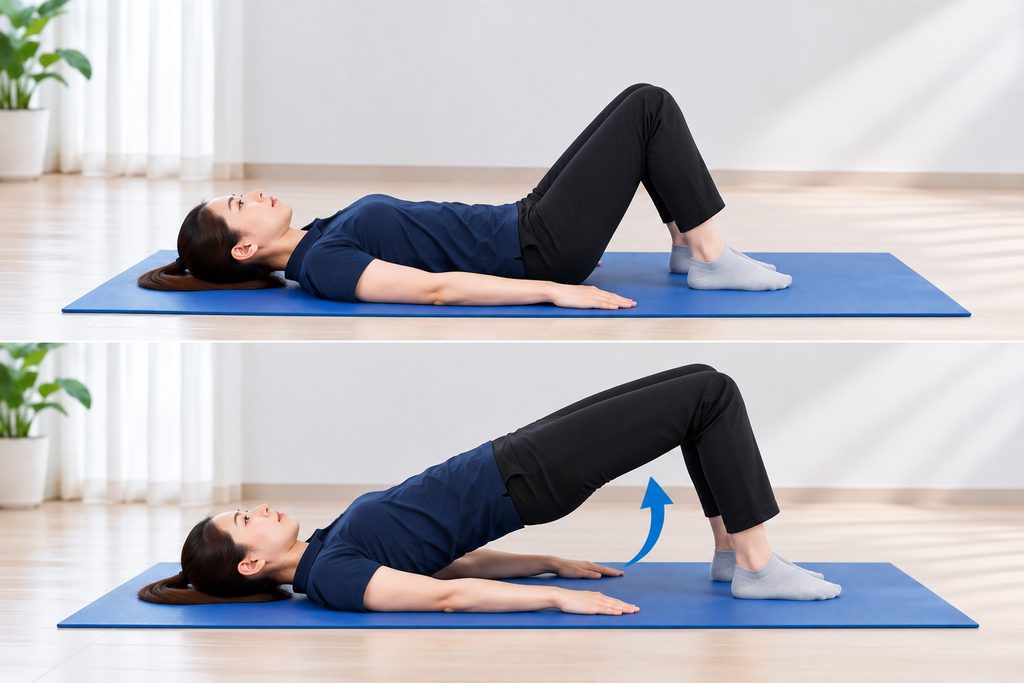
Helps strengthen the gluteal muscles and core.
How to do it
- Lie on your back with both knees bent and your feet flat on the floor.
- Place your arms by your sides.
- Gently tighten your abdominal muscles and squeeze your glutes.
- Slowly lift your hips off the floor.
- Keep your body aligned without arching your back excessively.
- Hold for about 5–10 seconds.
- Slowly lower your hips back to the floor.
Recommended: Repeat approximately 10 times.
5. Crunch
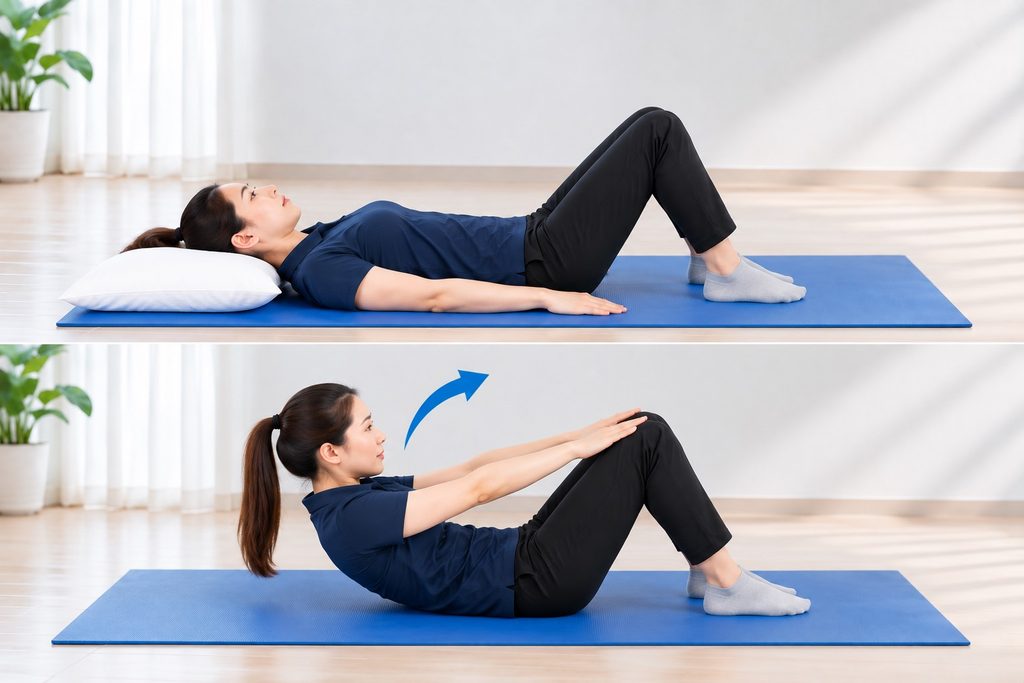
Helps strengthen the core muscles.
How to do it
- Lie on your back with both knees bent and your feet flat on the floor.
- Place your arms by your sides.
- Slowly lift your head and shoulders slightly off the floor.
- Slide your hands from your thighs toward your knees.
- Hold for about 5–10 seconds.
- Slowly lower your head and shoulders back to the floor.
Recommended: Repeat approximately 10 times.
Avoid lifting your upper body too high or pulling on your neck to assist the movement. Stop if your back pain worsens.
6. Half Push-Up / Back Extension
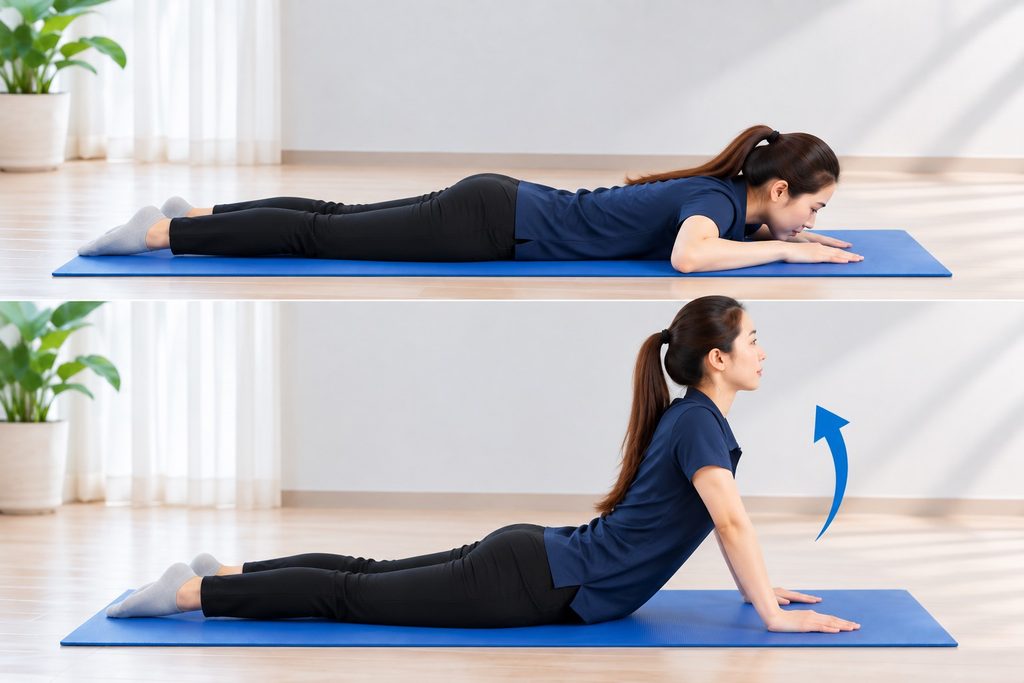
Helps improve mobility in the lower back.
How to do it
- Lie face down with your abdomen and torso resting on the floor.
- Place your hands or forearms on the floor beside your body.
- Slowly push up or lift your upper body.
- Keep your hips and lower body in contact with the floor.
- Raise your upper body only as far as feels comfortable. You do not need to lift very high.
- Hold for about 5–10 seconds.
- Slowly lower your body back to the floor.
Recommended: Repeat approximately 10 times, or according to your ability.
How Many Times a Day Should You Exercise?
You do not need to perform all six exercises in one session. The appropriate number of repetitions and intensity depend on your symptoms, strength, and ability to move.
If you are just starting, you can choose three to four exercises that feel comfortable. Gradually increase the number of exercises or their difficulty as your body adapts.
The key is to exercise consistently and increase the intensity gradually rather than forcing yourself to do too much at once. Guidelines for managing back pain emphasize staying active and choosing exercises that suit each individual’s needs.
When Should You See a Doctor?
Most cases of back pain can improve over time. However, unusual or severe symptoms should be assessed by a doctor, especially if you experience any of the following:
- Pain that radiates down your leg.
- Numbness or tingling sensations.
- Weakness in your legs.
- Difficulty walking or moving steadily.
- Pain that progressively worsens.
- Symptoms that persist or do not improve.
- Back pain following a serious accident or injury.
If you experience significant or unusual symptoms, do not force yourself to exercise in the hope that the pain will improve. Consult a doctor to identify the cause and determine the most appropriate treatment.
Prach kamlangsinserm— Orthopedic Surgeon, Arthroscopic Surgery
docpudscope.com
TikTok: @docpud_ortho
YouTube: @docpud
Facebook: กำลังดี คลินิกกระดูกและข้อ